
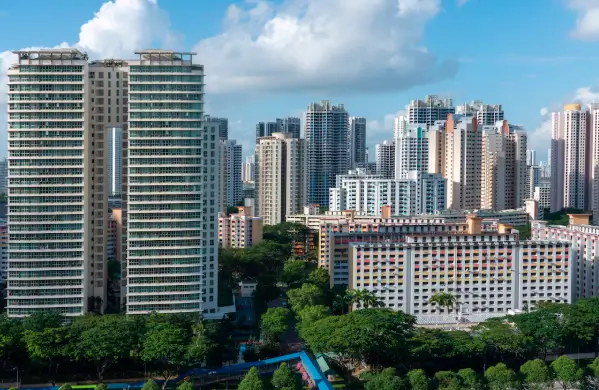
Singapore’s approach to urban planning has long been cited as a global benchmark, balancing density with liveability and economic growth with environmental sustainability. In recent years, however, the way residential developments are positioned within this framework has evolved significantly. Rather than concentrating desirability in a few central districts, planners and developers are increasingly shaping neighbourhoods around purpose, connectivity, and long-term relevance.
This shift has influenced how buyers evaluate new homes. Instead of asking whether a property is simply “central” or “prestigious,” buyers are considering how well a development fits into Singapore’s broader urban ecosystem. Projects such as Hudson Place Residences and Dunearn House demonstrate how different planning philosophies can coexist within the same city, each supporting a distinct residential experience.
From Centralisation to Purpose-Led Districts
One of the most visible trends in Singapore’s planning strategy is decentralisation. Employment hubs, lifestyle centres, and transport nodes are now spread across multiple regions, reducing congestion while improving quality of life. Residential developments that sit within or near these purpose-led districts benefit from built-in relevance.
The one-north precinct is a clear example of this approach. Designed as an innovation and research hub, the district integrates offices, educational institutions, public spaces, and transport infrastructure into a compact area. Hudson Place Residences, located within this environment, reflects how residential living can be seamlessly woven into a working district rather than placed on its periphery.
For residents, this translates into shorter commutes and a more efficient daily routine. From a planning perspective, it reduces pressure on the city centre while encouraging vibrant, self-sustaining communities.
Transport Infrastructure as a Value Anchor
Transport connectivity remains a key pillar of urban planning, but its role has evolved. Rather than merely linking homes to the city centre, modern transport networks now connect multiple lifestyle and employment nodes across the island.
Developments located near MRT lines and major arterial roads benefit from flexibility rather than dependence on a single destination. This flexibility enhances long-term value, as residents can adapt to changing work locations and lifestyle needs over time.
Both urban and established residential districts benefit from this networked approach. Whether a home is situated within an innovation hub or a quieter private enclave, connectivity ensures it remains integrated within the broader city fabric.
Preserving Residential Character in Mature Districts
While new growth areas receive much attention, Singapore’s mature residential neighbourhoods continue to play a vital role in the housing landscape. These areas are often carefully protected to preserve their character, greenery, and low-density environment.
Dunearn House, located along Dunearn Road, is situated within one such established area. Developments here are shaped by planning controls that prioritise liveability over intensity, ensuring that new projects complement rather than overwhelm the existing neighbourhood.
For homeowners, this translates into consistency. The surrounding environment is less likely to undergo dramatic change, offering reassurance to those seeking long-term residential stability. This is particularly attractive to families and owner-occupiers who view their homes as multi-decade commitments.
Designing for Longevity, Not Trends
A common thread across well-positioned developments is a focus on longevity. Instead of chasing short-term design trends, planners and developers are placing greater emphasis on adaptability, functional layouts, and enduring architectural language.
This is evident in both city-fringe and mature-district projects. Homes are increasingly designed to accommodate evolving lifestyles, including remote work, multi-generational living, and changing household sizes. Facilities are curated to support daily routines rather than serve as novelty features.
Developments such as Hudson Place Residences and Dunearn House, though different in setting, reflect this broader move toward sustainable residential design that remains relevant over time.
What Buyers Can Learn from Planning Patterns
Understanding urban planning trends provides buyers with a valuable lens through which to evaluate properties. A well-located home is no longer defined solely by proximity to the city centre, but by how effectively it integrates with transport networks, employment zones, and established communities.
Projects located within purpose-driven districts may offer dynamic growth and rental demand, while those in protected residential enclaves offer stability and long-term desirability. Neither approach is inherently superior; the key lies in alignment with personal priorities and future plans.
A City Built on Choice
Singapore’s housing landscape is increasingly defined by intentional diversity. By offering homes across different environments — from innovation-centric hubs to tranquil private estates — the city allows residents to choose lifestyles rather than compromise.
In this context, developments like Hudson Place Residences and Dunearn House illustrate how thoughtful urban planning can support multiple ways of living within a single, cohesive city. As planning strategies continue to evolve, this balance between growth and preservation will remain central to Singapore’s residential identity.
